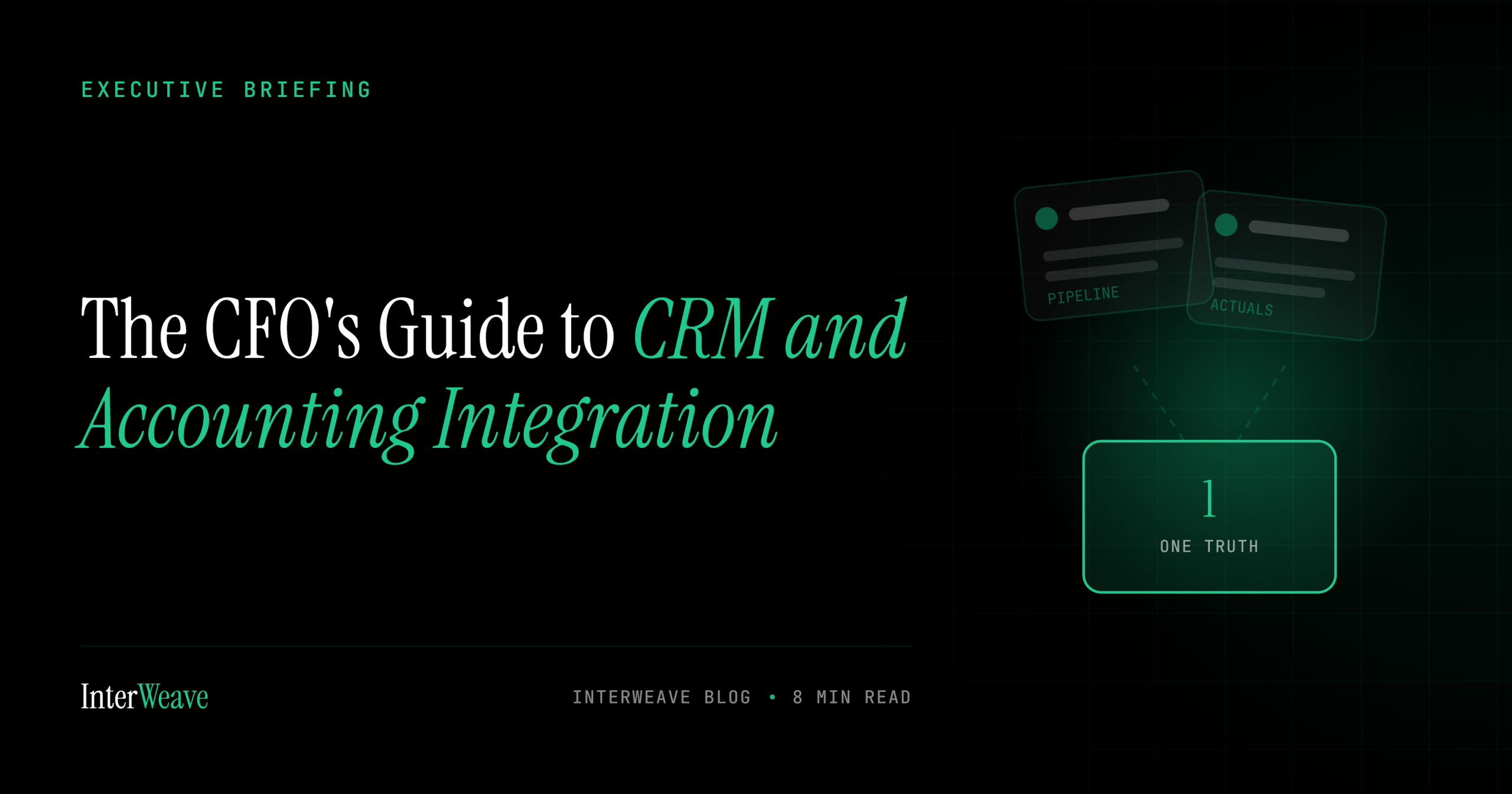

CRM integration usually gets pitched to sales leadership. That’s a mistake. The executive with the most to gain from connecting the CRM to the accounting system is the CFO — because the gap between those two systems is where forecasts go wrong, cash gets stuck, the close drags, and audit questions turn into archaeology. Here’s what integration changes across the five things the office of the CFO owns.
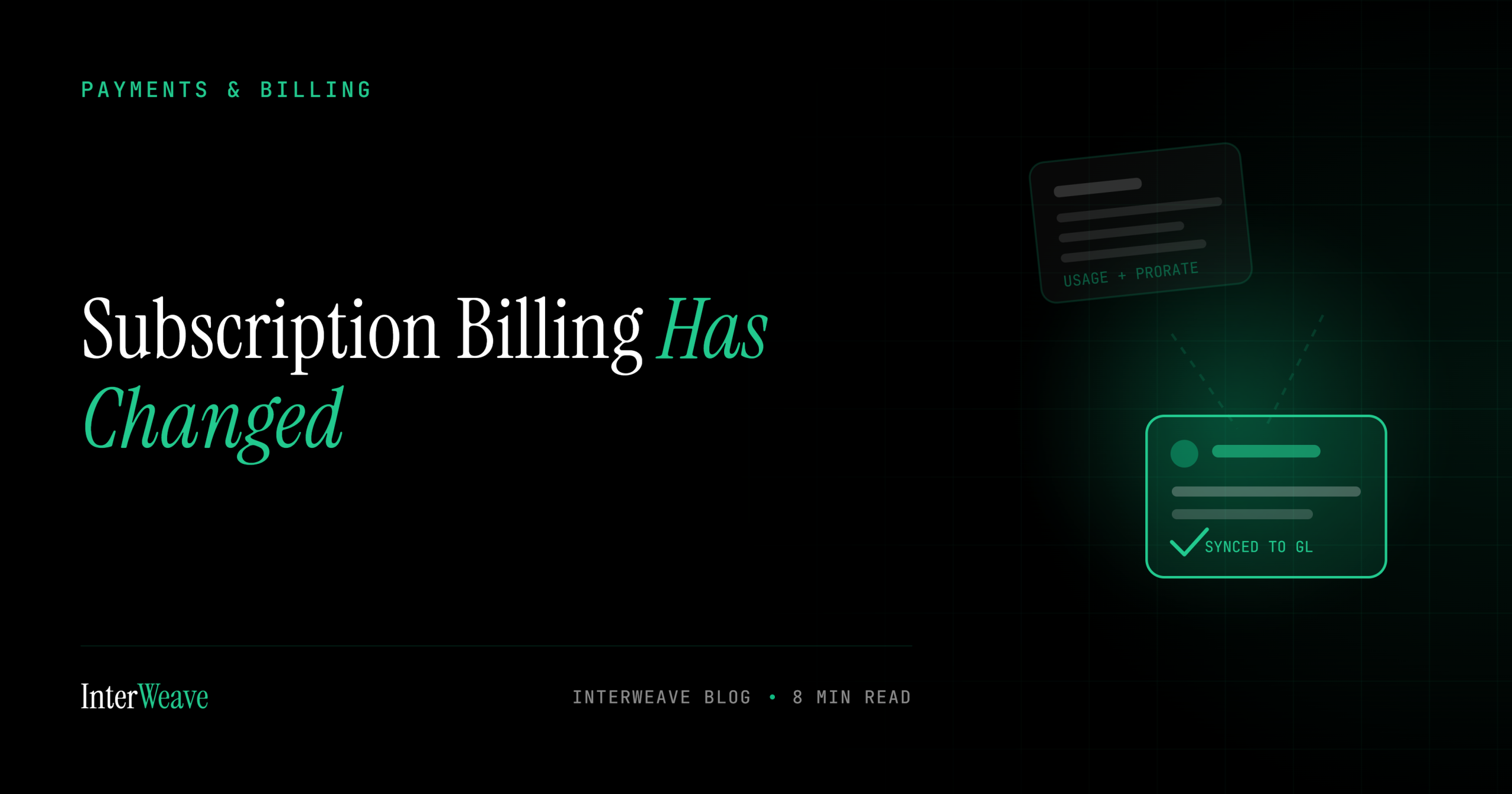
A decade ago, subscription billing meant charging the same card the same amount on the same day each month. Today the average recurring-revenue business runs mixed models — subscriptions plus usage plus one-time orders — across multiple payment methods, with customers who expect to upgrade mid-cycle and be prorated to the penny. The billing run stopped being a calendar event and became a system. Here’s what that system has to do now — and why most of it is integration work, not billing software.
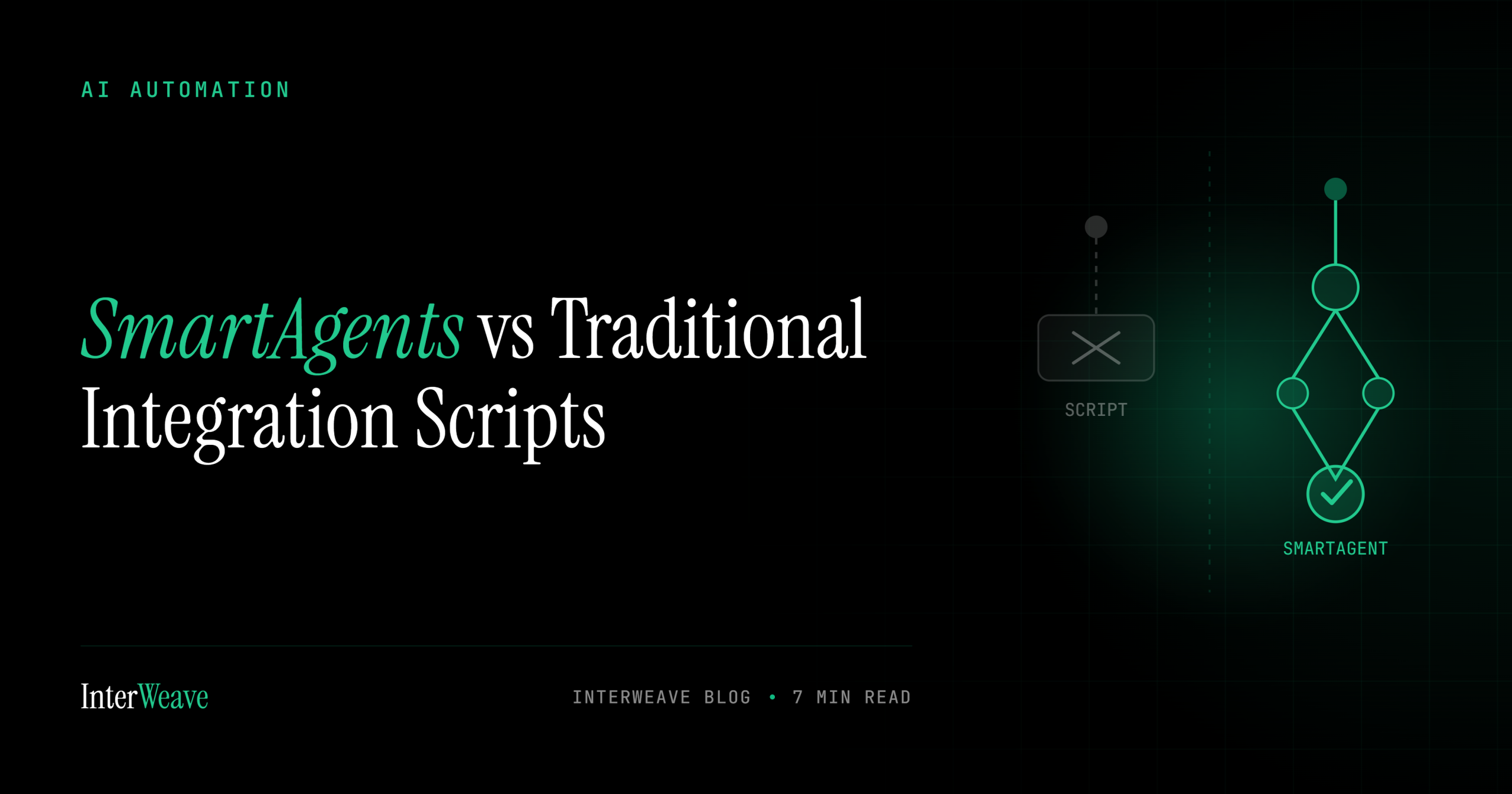
For twenty years, the workhorse of business integration has been the scheduled script: every fifteen minutes, wake up, pull new records, map fields, push, sleep. It’s a fine design — for the rows that match. The business, unfortunately, happens in the rows that don’t. AI agents represent a different contract with the work. A script executes instructions; an agent pursues an outcome. The difference sounds philosophical until you watch both handle the same Tuesday.
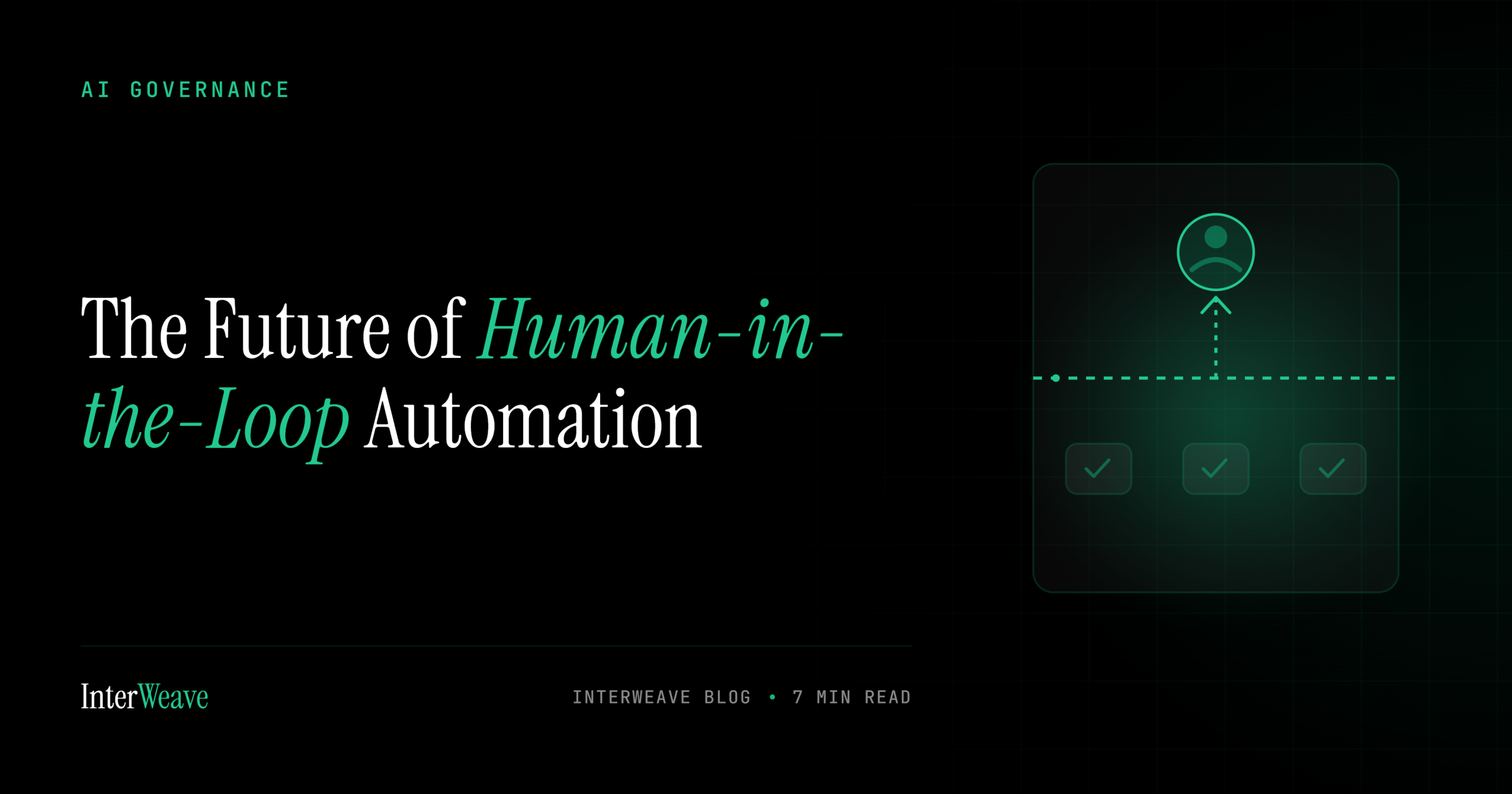
The AI conversation swings between two fantasies: full autonomy (“fire-and-forget agents run the business”) and full control (“a human reviews everything”). Neither survives contact with a real company. Full autonomy fails the first time an agent refunds the wrong customer; full review just recreates the manual work with extra steps. The durable answer is the boring-sounding one: human-in-the-loop — automation that knows exactly when to stop and ask.
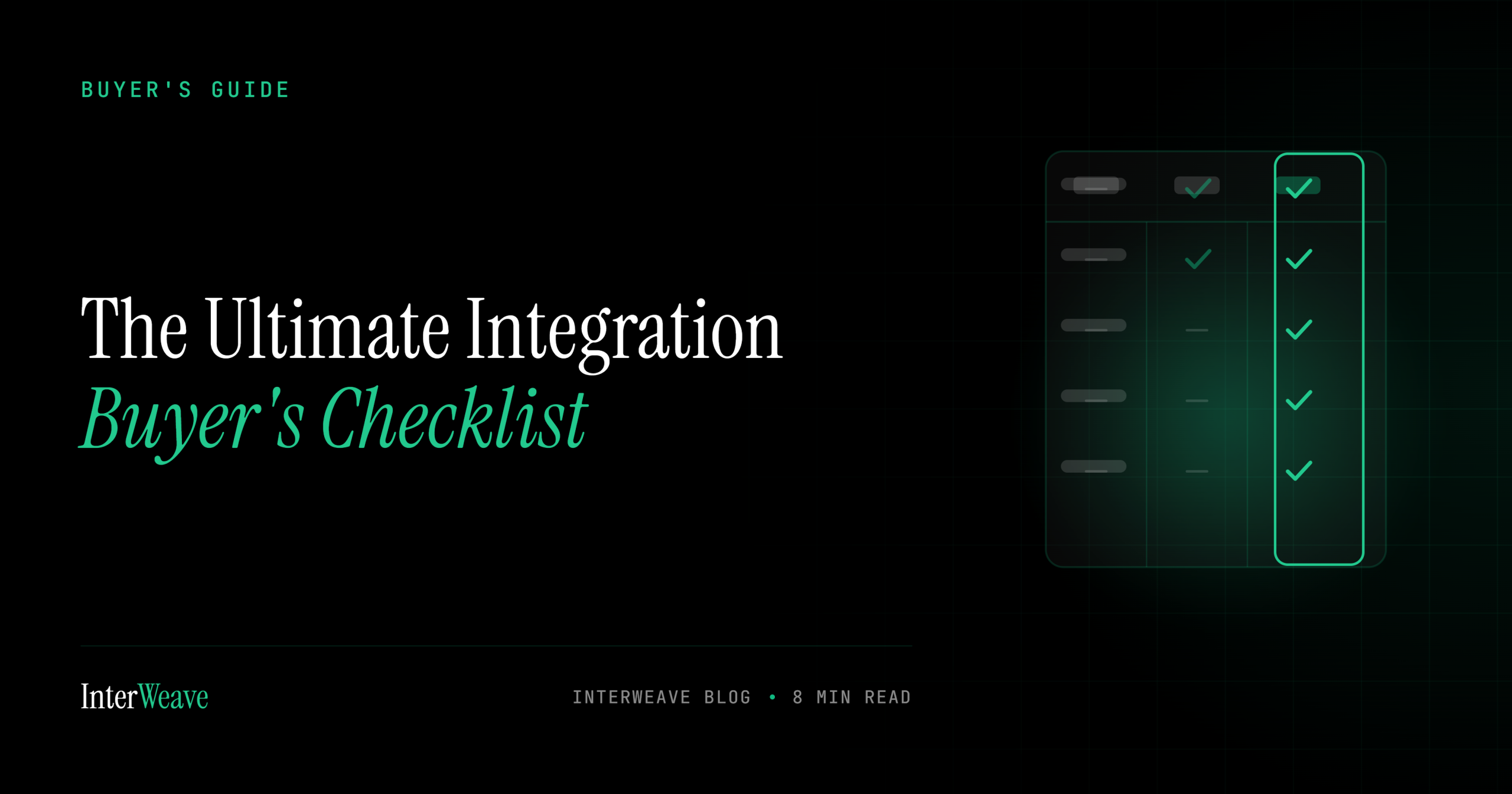
Integration platforms all demo beautifully. The differences that matter — what happens when an API changes, when volume spikes, when a flow touching money fails at 2 a.m. — never appear on the demo script. This checklist is built to surface them. Put the same 28 questions to every vendor, score the answers, and the decision usually makes itself.
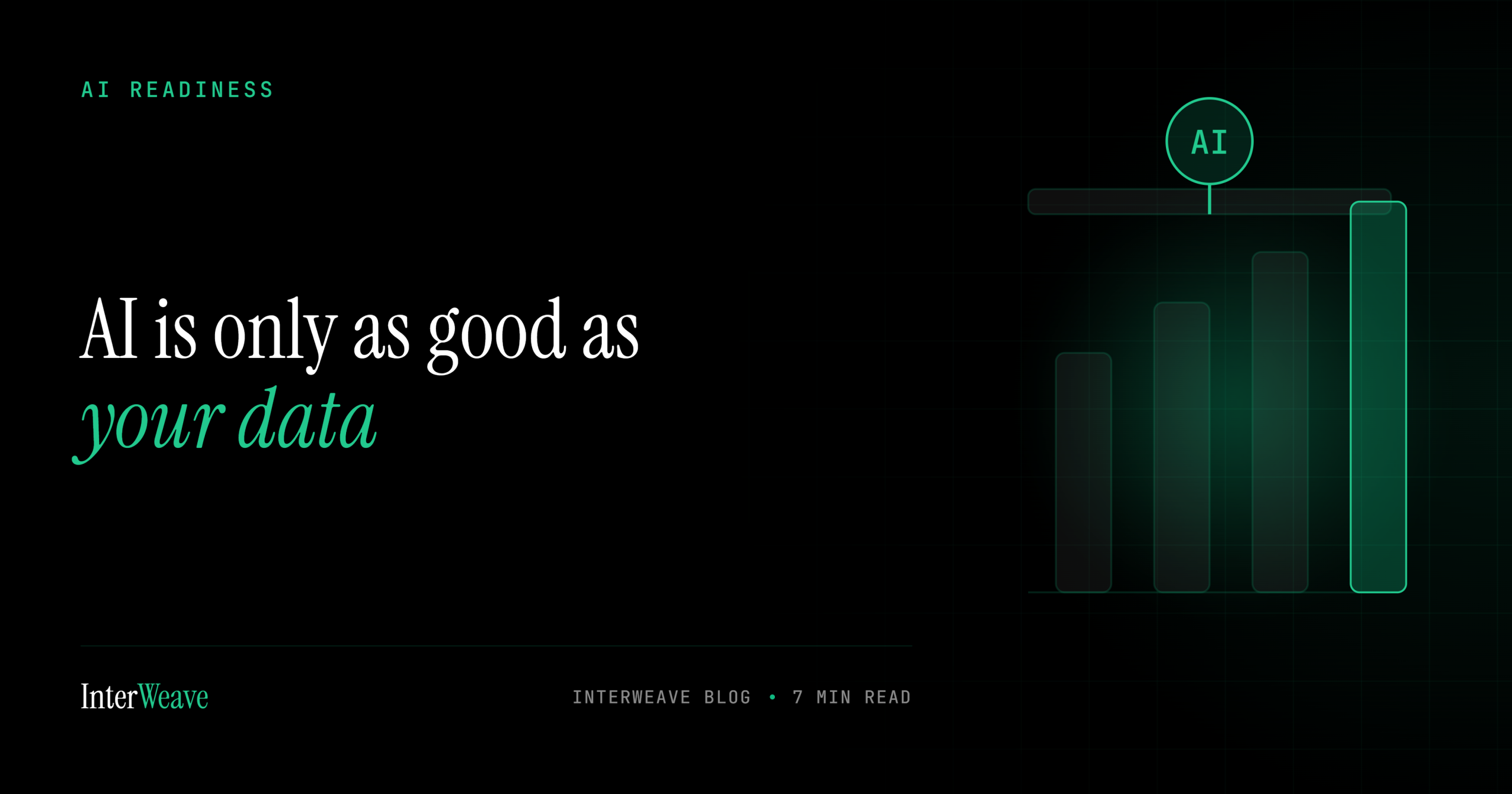
Every executive team is under pressure to “do something with AI.” Most of them are about to discover the same uncomfortable truth: an AI agent pointed at fragmented, duplicated, out-of-date business data doesn’t produce automation — it produces mistakes at machine speed.
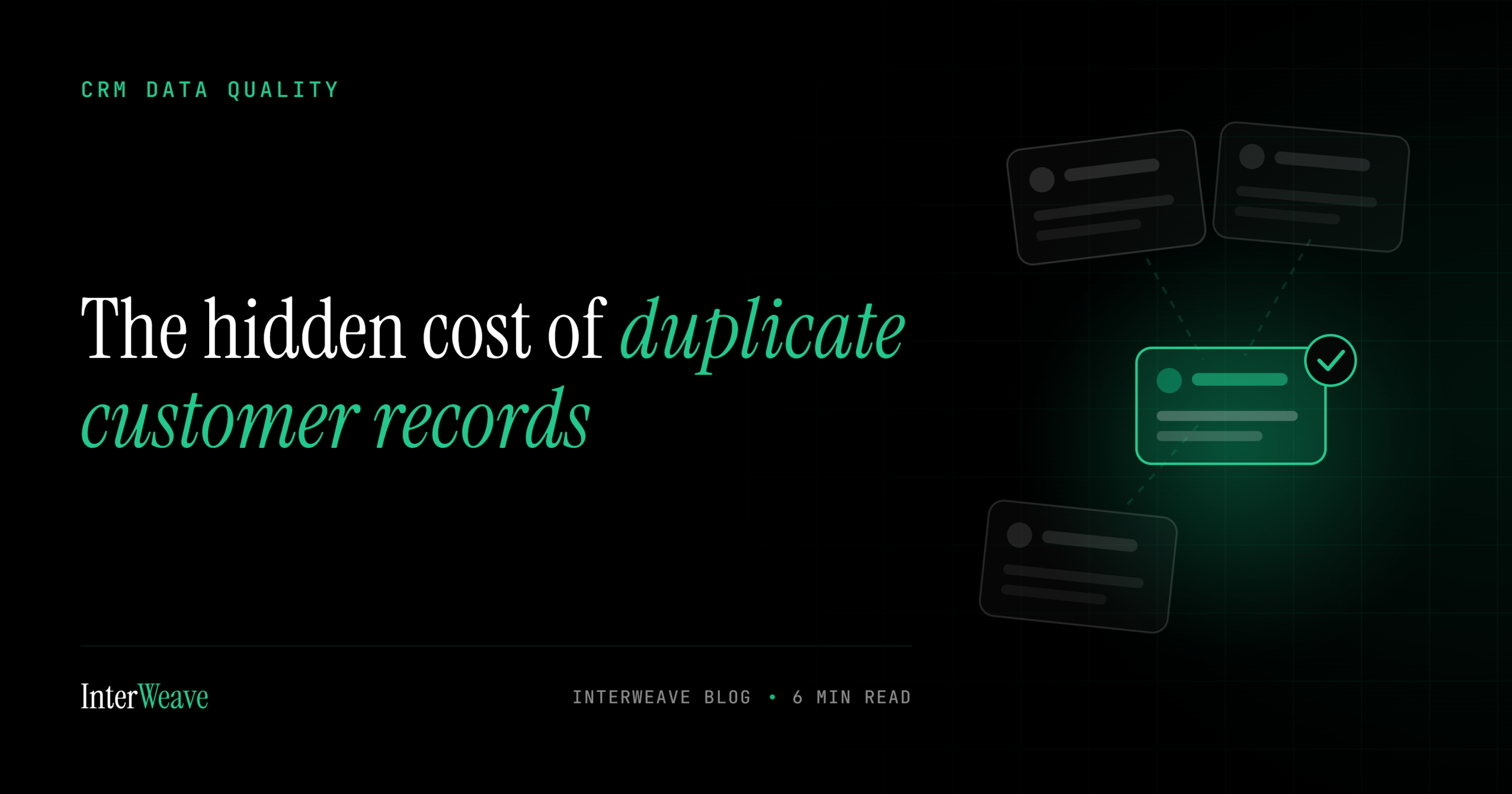
Search for one of your biggest customers across your CRM, your accounting system, your payment gateway, and your support desk. If you find them once in each system — spelled the same way, with the same address and the same ID — you’re in a small minority. Most mid-market companies carry three to five versions of every customer, and each duplicate is quietly costing money.
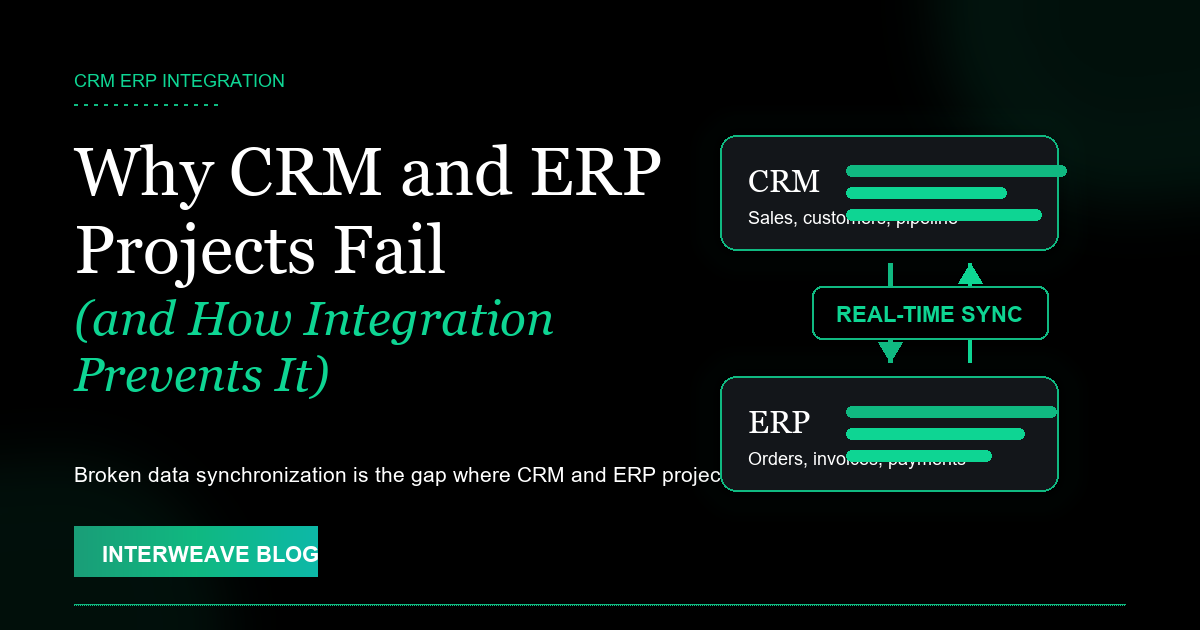
Industry analysts have repeated the same finding for two decades: somewhere between a third and two-thirds of CRM and ERP implementations fail to deliver their expected value. The software rarely gets the blame it deserves the least — and the real culprit almost never appears in the project plan. It’s the space between the systems. A CRM implementation and an ERP implementation are usually run as two separate projects, by two separate teams, on two separate timelines. Each one can succeed on its own terms while the business still fails to get what it paid for: one accurate picture of every customer, every order, and every dollar. That picture only exists when data synchronization between the systems is treated as a first-class requirement — not a phase-two afterthought.
The systems you connected with InterWeave are still connected. Now they’re connected in a platform capable of doing things they couldn’t do before — and you didn’t have to rebuild anything. One of the most important things to understand about the move to the InterWeave Automation Platform^AI is what it doesn’t require from you: a new implementation, a new vendor evaluation, a new budget cycle, a rip-and-replace project. The integrations you built are the foundation the Platform^AI runs on.
The most expensive operational failures are the ones you saw coming — and didn’t have a system fast enough to stop. Most mid-market operations teams are excellent at responding to problems. They’ve built refined processes for handling exceptions, resolving discrepancies, and managing escalations. What they’re not equipped for — because it hasn’t been technologically accessible until recently — is acting on problems before they become exceptions.
Featured Posts

Don’t Replace the ERP. Connect It.

CRM + ERP = Quote-to-Cash
