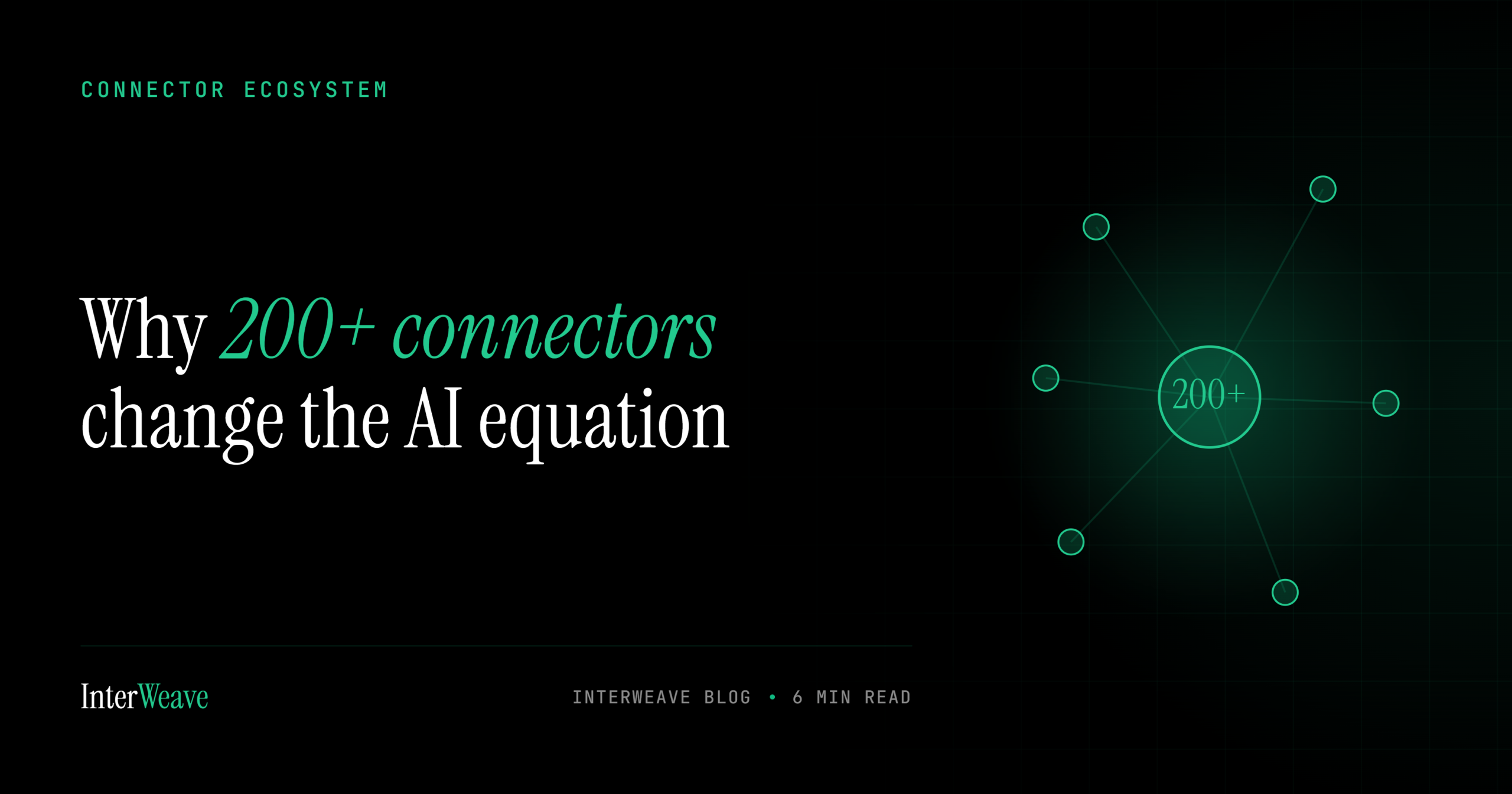

AI can’t act on data it can’t reach. The Connector Ecosystem is how the Platform^AI gets access to the full operational picture — and that access is what makes intelligent action possible. There’s a reason InterWeave built the Connector Ecosystem before building AI. You can’t train a model on data you haven’t connected. You can’t automate a process you haven’t mapped. You can’t build an autonomous agent without the real-time data streams it needs to operate.
Your Integration Investment Didn’t Change. Its Ceiling Did. | InterWeave Blog Customer Value Your Integration Investment Didn’t Change. Its Ceiling Did. InterWeave EditorialJune 20265 min read The systems you connected with InterWeave are still connected….
Enterprise AI tools are built for companies with enterprise data teams. The InterWeave Automation Platform^AI is built for the companies running Salesforce and QuickBooks — and trying to make them work like one system. When AI automation gets written about in the business press, the examples are usually from Fortune 500 companies with hundred-person data science teams. The implication: AI-driven operations are for the big players. That implication is wrong — and mid-market companies that recognize it first will hold a significant operational advantage.
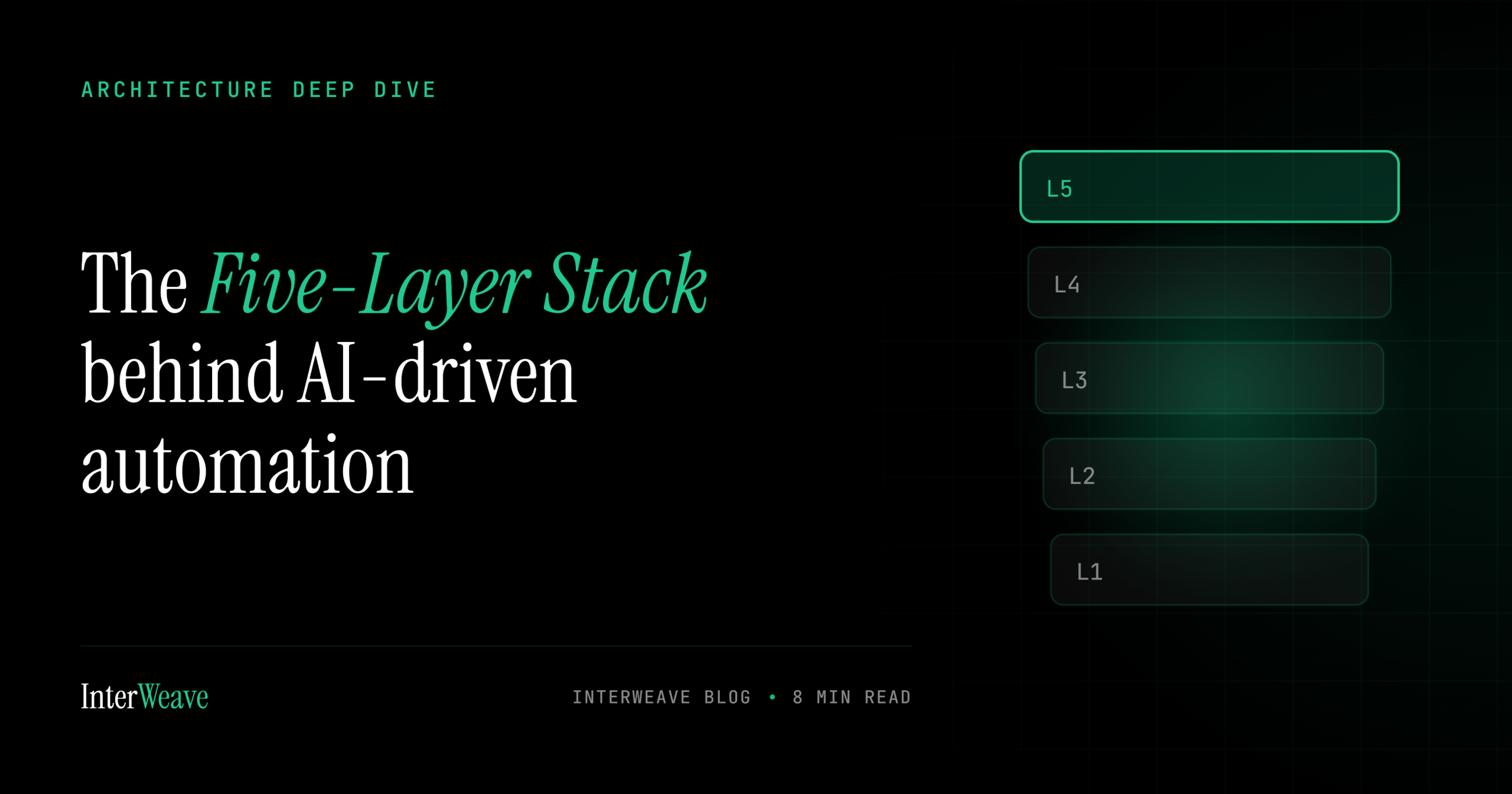
Most AI integrations fail not because the AI isn’t capable — but because the data foundation beneath it isn’t structured enough to act on. The InterWeave Automation Platform^AI is built on five distinct layers, each with a defined responsibility. Understanding how they interconnect is the key to understanding why the platform can do what it does — and why stacking AI on top of poor integration infrastructure produces expensive disappointment.

Key Trends & How InterWeave SmartSolutions Is Already Aligned As businesses move faster and scale smarter, enterprise integrations are evolving from static data pipes into dynamic, intelligent systems. The future belongs to platforms that blend AI, API-driven architecture, and automation—creating adaptable,…

Best Practices for Modular Architecture, Future-Proofing, and Compliance As your business grows—adding new systems, users, regions, and revenue streams—your integrations must evolve with you. Scaling successfully isn’t just about handling more data; it’s about building modular, secure, and adaptable workflows that support…

What does multi-cloud integration mean—and why should you care?

How to Integrate Salesforce with ERP Systems like MS Dynamics and Sage? Integrating Salesforce with ERP systems like Microsoft Dynamics 365 and Sage using InterWeave SmartSolutions allows your organization to seamlessly connect front-office CRM operations with back-office financial and operational data—bridging the gap between…

What is ACH Payment Processing—and How Can Businesses Automate It? ACH payment processing refers to the transfer of funds between bank accounts through the Automated Clearing House (ACH) network—a U.S.-based system used for direct deposits, bill payments, and…

Salesforce can integrate with QuickBooks for real-time financial data using InterWeave SmartSolutions, a configurable integration platform designed to connect CRM, accounting, and other systems seamlessly. Here’s a breakdown of how this works—focusing on syncing invoices, payments, customers, and the benefits of real-time financial visibility:…
Featured Posts

Your ERP Shouldn’t Be an Island

