
Integration platforms all demo beautifully. The differences that matter — what happens when an API changes, when volume spikes, when a flow touching money fails at 2 a.m. — never appear on the demo script. This checklist is built to surface them. Put the same 28 questions to every vendor, score the answers, and the decision usually makes itself.
Every executive team is under pressure to “do something with AI.” Most of them are about to discover the same uncomfortable truth: an AI agent pointed at fragmented, duplicated, out-of-date business data doesn’t produce automation — it produces mistakes at machine speed.
Search for one of your biggest customers across your CRM, your accounting system, your payment gateway, and your support desk. If you find them once in each system — spelled the same way, with the same address and the same ID — you’re in a small minority. Most mid-market companies carry three to five versions of every customer, and each duplicate is quietly costing money.
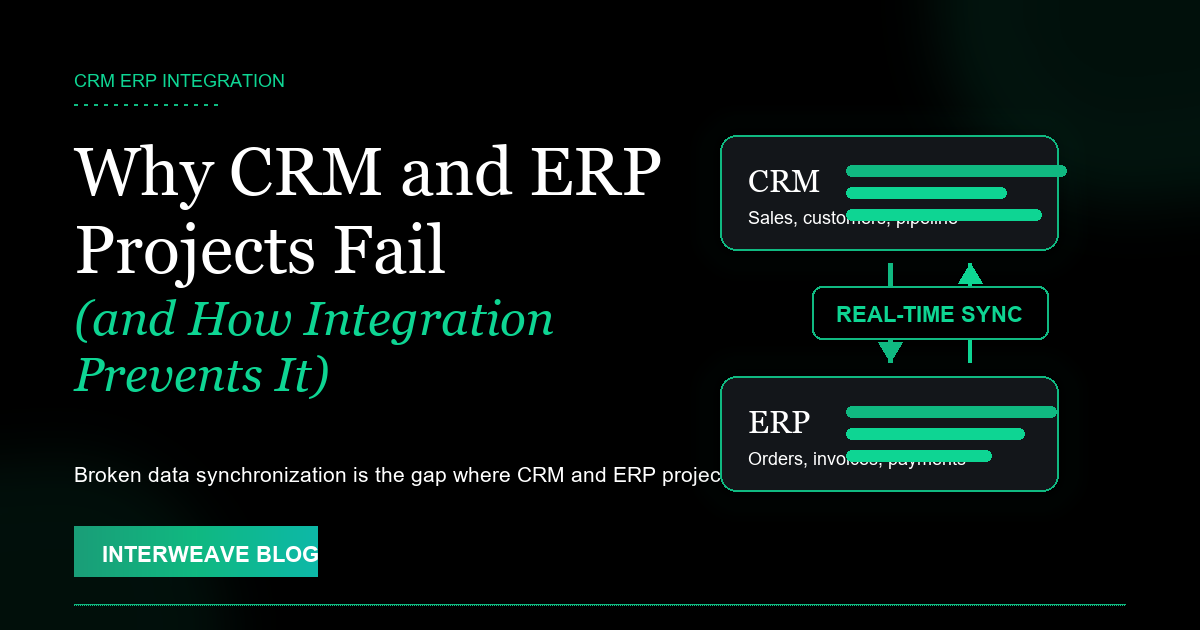
Industry analysts have repeated the same finding for two decades: somewhere between a third and two-thirds of CRM and ERP implementations fail to deliver their expected value. The software rarely gets the blame it deserves the least — and the real culprit almost never appears in the project plan. It’s the space between the systems. A CRM implementation and an ERP implementation are usually run as two separate projects, by two separate teams, on two separate timelines. Each one can succeed on its own terms while the business still fails to get what it paid for: one accurate picture of every customer, every order, and every dollar. That picture only exists when data synchronization between the systems is treated as a first-class requirement — not a phase-two afterthought.
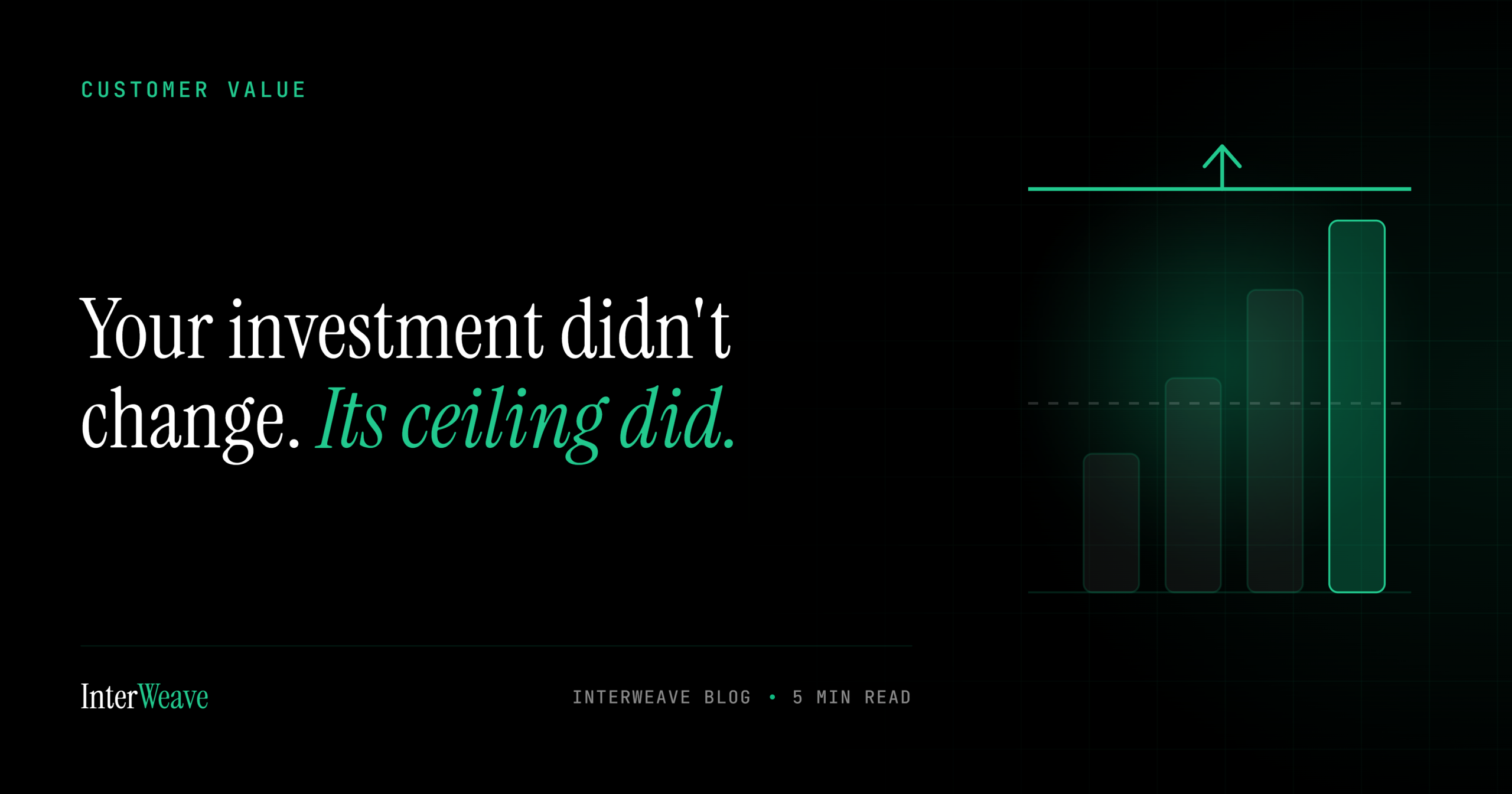
The systems you connected with InterWeave are still connected. Now they’re connected in a platform capable of doing things they couldn’t do before — and you didn’t have to rebuild anything. One of the most important things to understand about the move to the InterWeave Automation Platform^AI is what it doesn’t require from you: a new implementation, a new vendor evaluation, a new budget cycle, a rip-and-replace project. The integrations you built are the foundation the Platform^AI runs on.
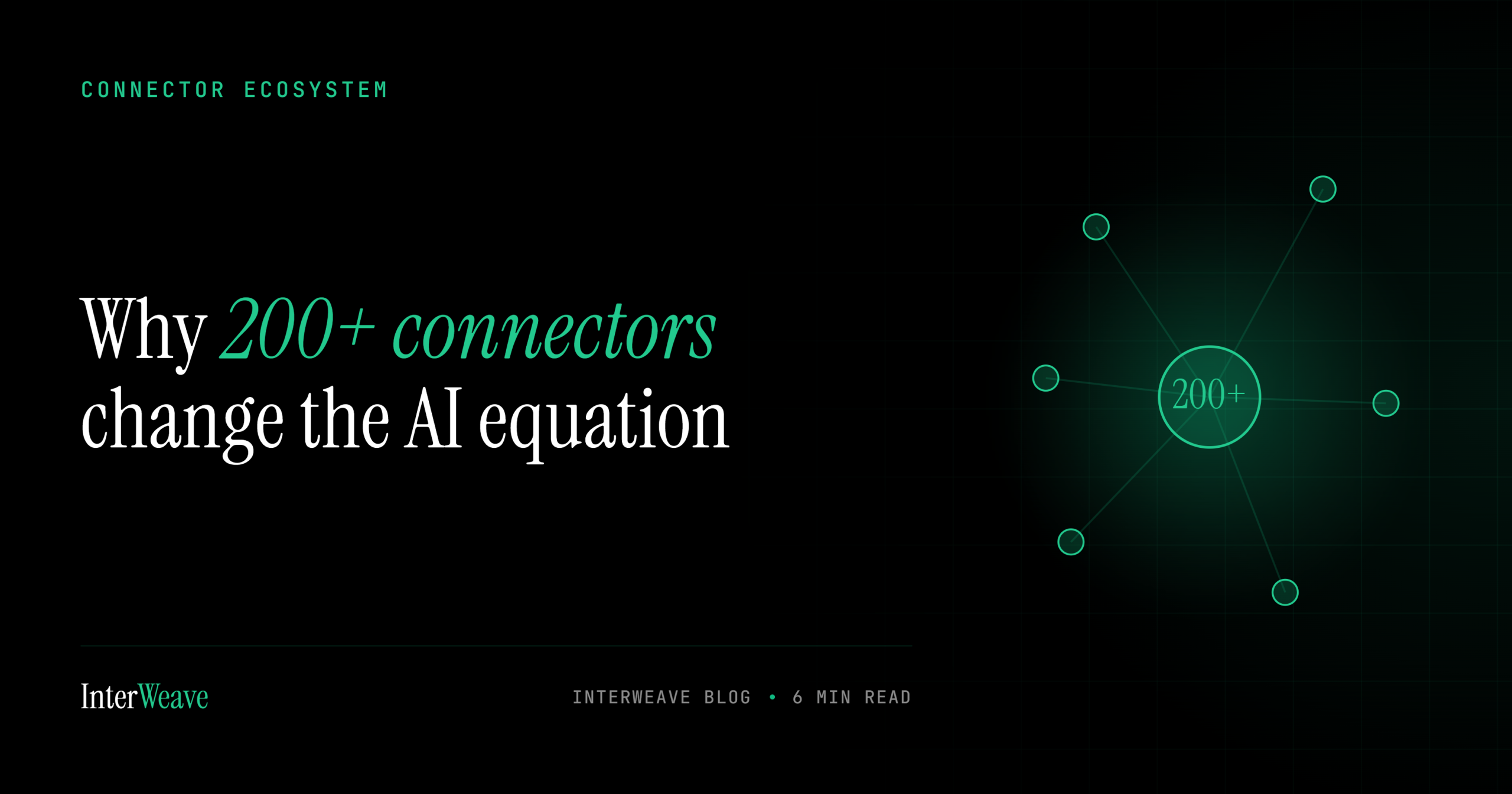
AI can’t act on data it can’t reach. The Connector Ecosystem is how the Platform^AI gets access to the full operational picture — and that access is what makes intelligent action possible. There’s a reason InterWeave built the Connector Ecosystem before building AI. You can’t train a model on data you haven’t connected. You can’t automate a process you haven’t mapped. You can’t build an autonomous agent without the real-time data streams it needs to operate.

Every finance team knows the feeling of the endless data loop. The day starts with Salesforce or another CRM, jumps into QuickBooks or NetSuite, hops over to Stripe, PayPal, and a banking portal, then lands in Excel for copy‑and‑paste marathons. By…
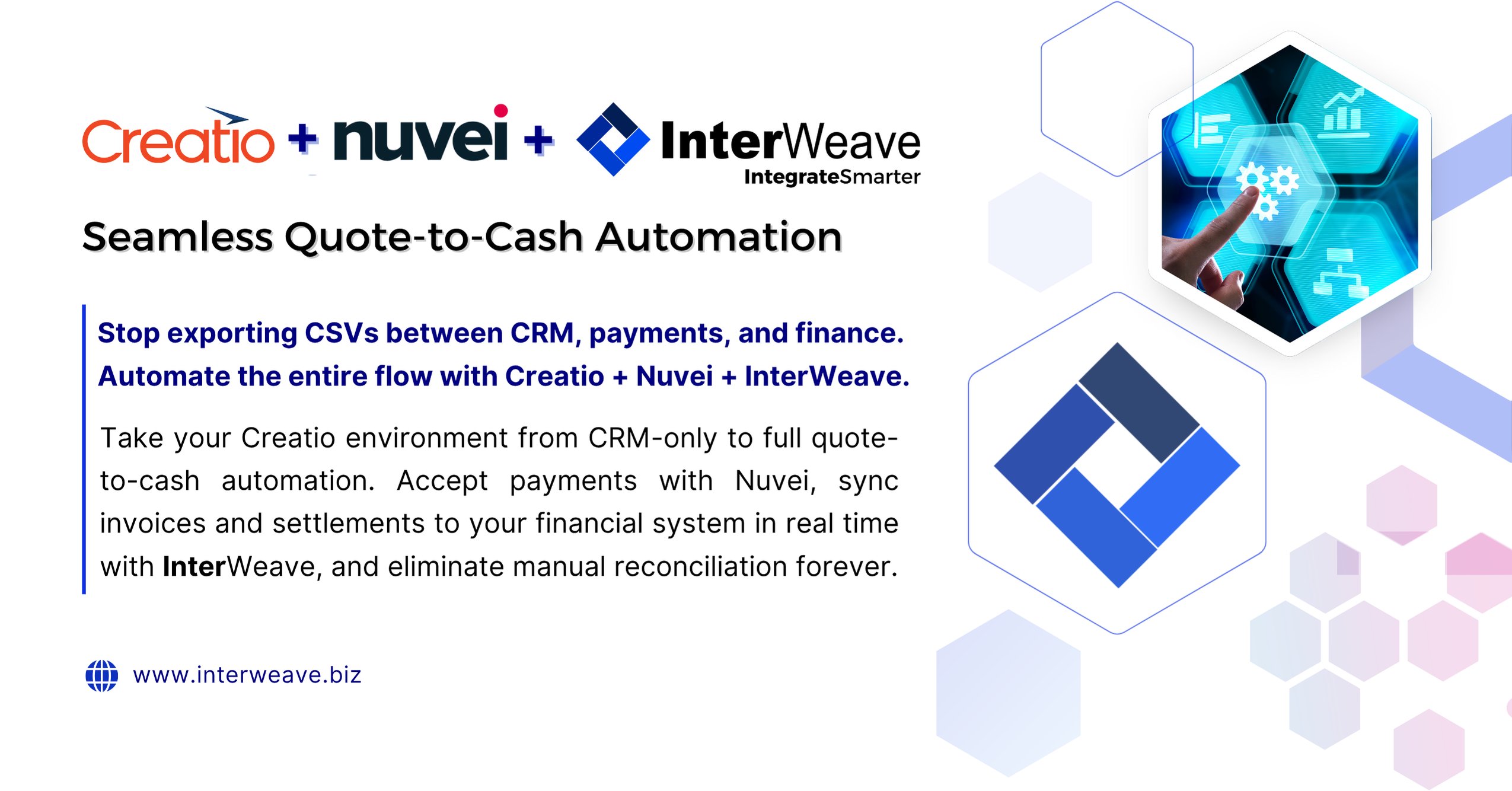
The problem: Most organizations today still treat CRM, payments, and financial systems as three separate silos. That creates friction, PCI exposure, reporting delays, and hours of manual double-entry. The solution: A fully connected payment and…
When integrating platforms like Salesforce, QuickBooks, Sage, payment gateways, or ERP systems, one of the biggest risks is data inconsistency—leading to errors in reporting, billing, or customer communications. Ensuring data integrity is not just about syncing data; it’s about syncing it accurately, completely, and…
A Guide to Open Architecture, API Flexibility, and Future-Proofing Your Tech Stack Vendor lock-in happens when businesses become overly dependent on one provider’s ecosystem—making it hard (and expensive) to switch tools or scale. But with…
Featured Posts

CRM + ERP = Quote-to-Cash

Your ERP Shouldn’t Be an Island
