
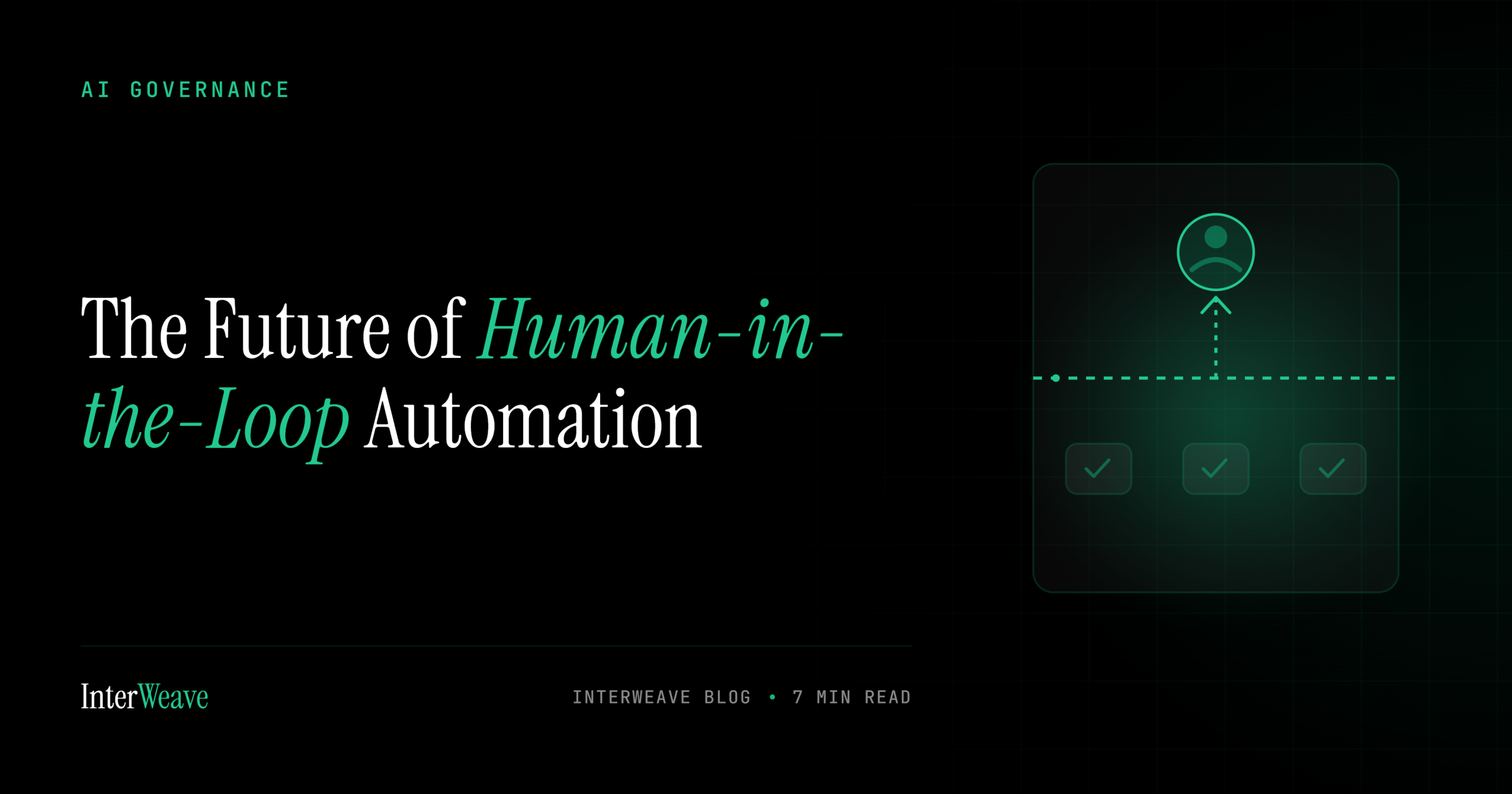

The AI conversation swings between two fantasies: full autonomy (“fire-and-forget agents run the business”) and full control (“a human reviews everything”). Neither survives contact with a real company. Full autonomy fails the first time an agent refunds the wrong customer; full review just recreates the manual work with extra steps. The durable answer is the boring-sounding one: human-in-the-loop — automation that knows exactly when to stop and ask.
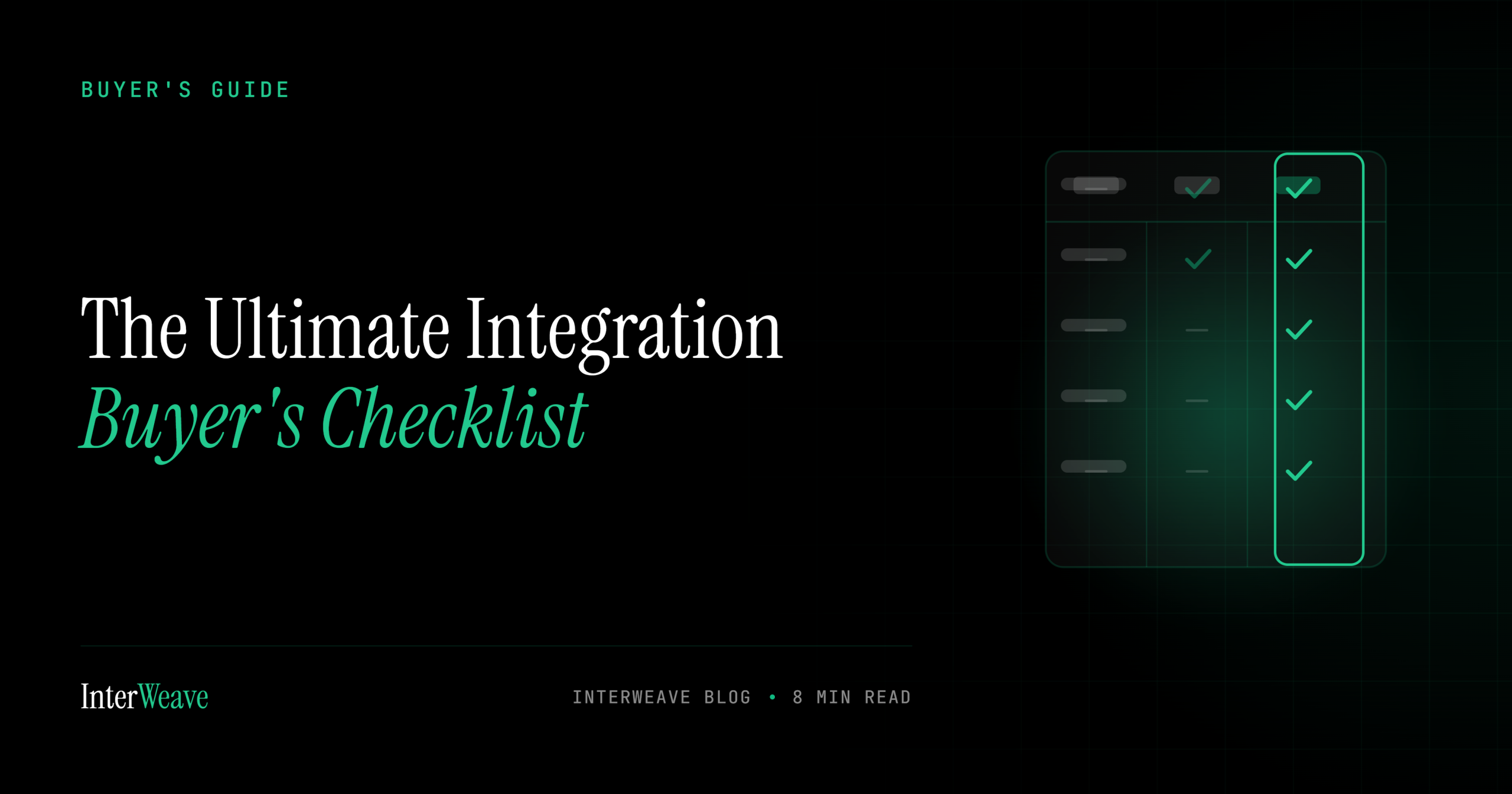
Integration platforms all demo beautifully. The differences that matter — what happens when an API changes, when volume spikes, when a flow touching money fails at 2 a.m. — never appear on the demo script. This checklist is built to surface them. Put the same 28 questions to every vendor, score the answers, and the decision usually makes itself.
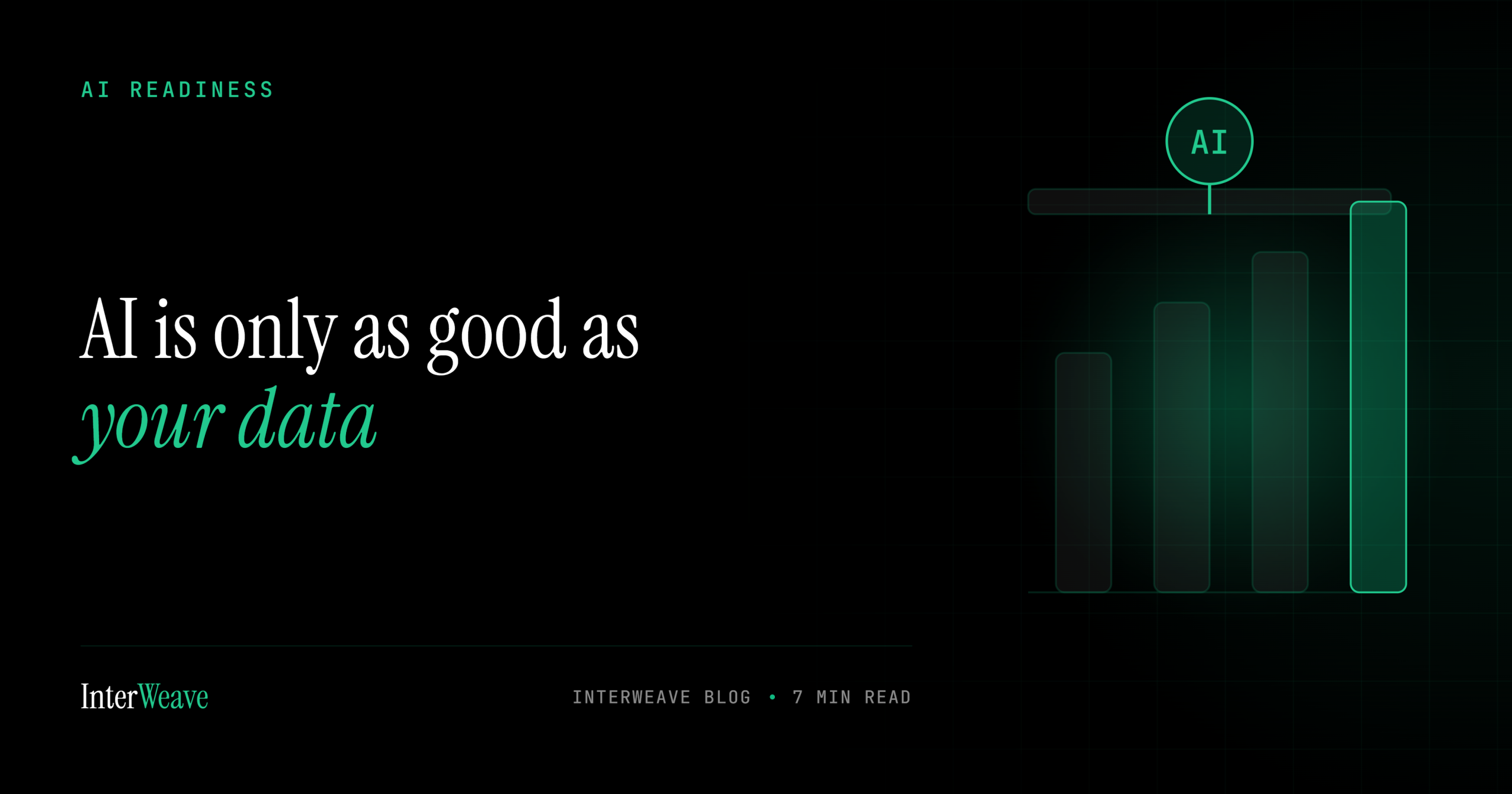
Every executive team is under pressure to “do something with AI.” Most of them are about to discover the same uncomfortable truth: an AI agent pointed at fragmented, duplicated, out-of-date business data doesn’t produce automation — it produces mistakes at machine speed.
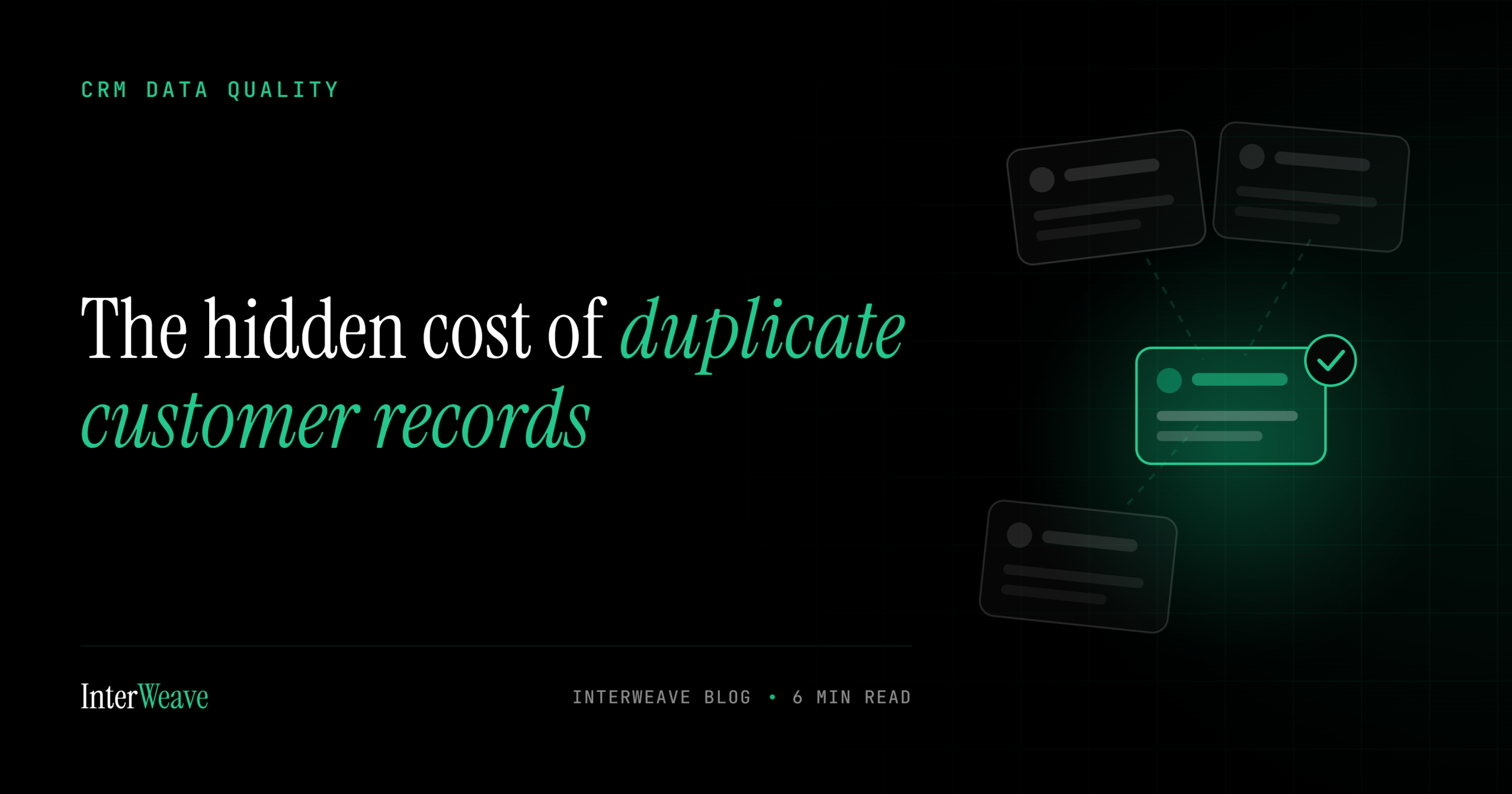
Search for one of your biggest customers across your CRM, your accounting system, your payment gateway, and your support desk. If you find them once in each system — spelled the same way, with the same address and the same ID — you’re in a small minority. Most mid-market companies carry three to five versions of every customer, and each duplicate is quietly costing money.
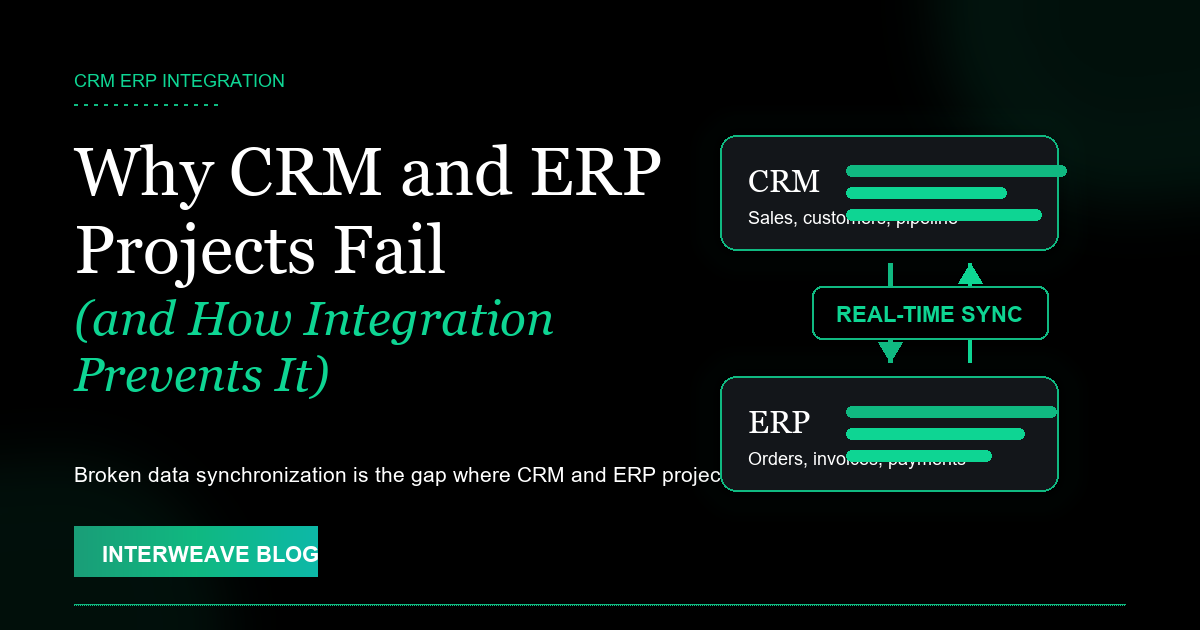
Industry analysts have repeated the same finding for two decades: somewhere between a third and two-thirds of CRM and ERP implementations fail to deliver their expected value. The software rarely gets the blame it deserves the least — and the real culprit almost never appears in the project plan. It’s the space between the systems. A CRM implementation and an ERP implementation are usually run as two separate projects, by two separate teams, on two separate timelines. Each one can succeed on its own terms while the business still fails to get what it paid for: one accurate picture of every customer, every order, and every dollar. That picture only exists when data synchronization between the systems is treated as a first-class requirement — not a phase-two afterthought.
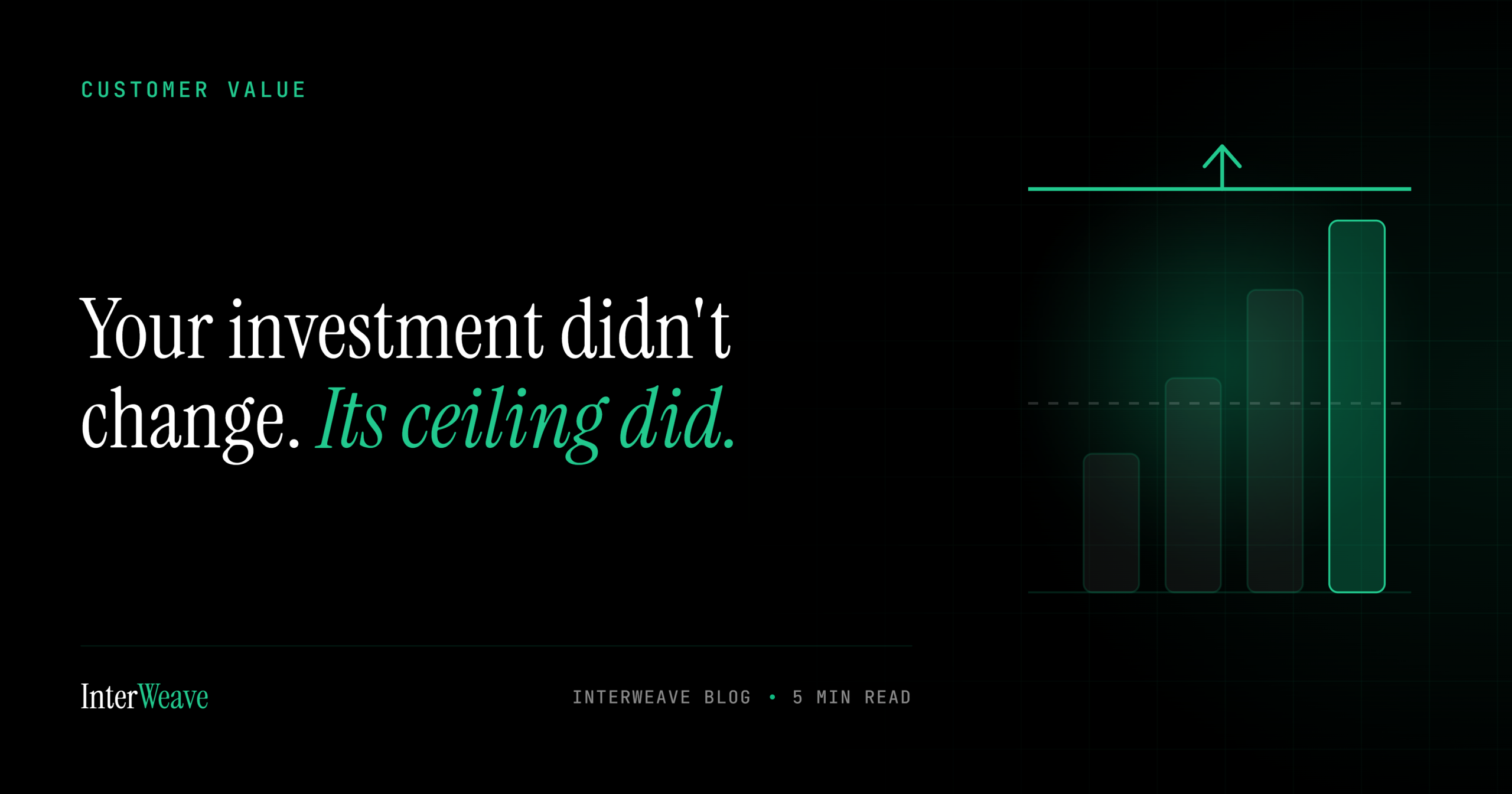
The systems you connected with InterWeave are still connected. Now they’re connected in a platform capable of doing things they couldn’t do before — and you didn’t have to rebuild anything. One of the most important things to understand about the move to the InterWeave Automation Platform^AI is what it doesn’t require from you: a new implementation, a new vendor evaluation, a new budget cycle, a rip-and-replace project. The integrations you built are the foundation the Platform^AI runs on.
The most expensive operational failures are the ones you saw coming — and didn’t have a system fast enough to stop. Most mid-market operations teams are excellent at responding to problems. They’ve built refined processes for handling exceptions, resolving discrepancies, and managing escalations. What they’re not equipped for — because it hasn’t been technologically accessible until recently — is acting on problems before they become exceptions.
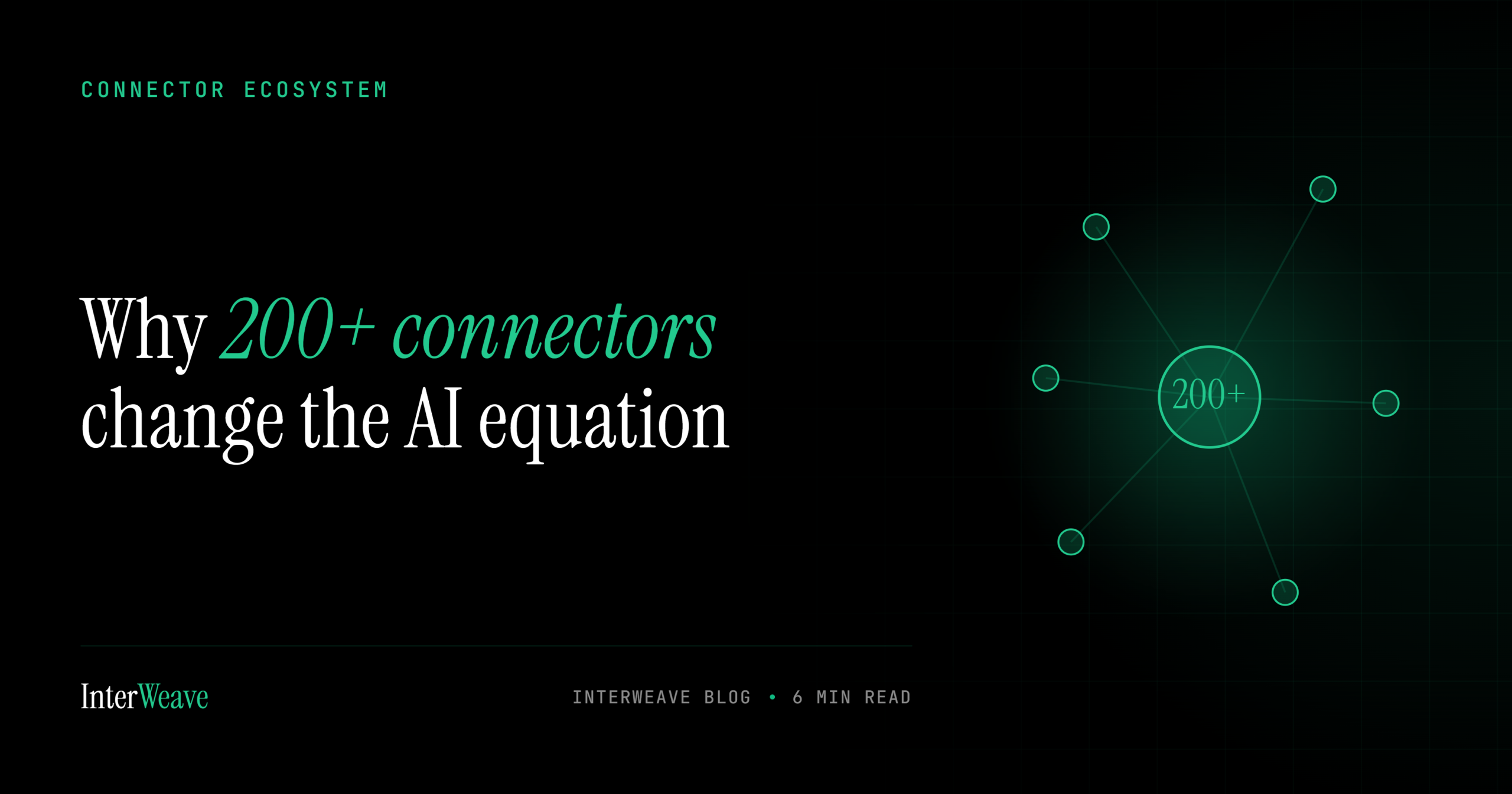
AI can’t act on data it can’t reach. The Connector Ecosystem is how the Platform^AI gets access to the full operational picture — and that access is what makes intelligent action possible. There’s a reason InterWeave built the Connector Ecosystem before building AI. You can’t train a model on data you haven’t connected. You can’t automate a process you haven’t mapped. You can’t build an autonomous agent without the real-time data streams it needs to operate.
Your Integration Investment Didn’t Change. Its Ceiling Did. | InterWeave Blog Customer Value Your Integration Investment Didn’t Change. Its Ceiling Did. InterWeave EditorialJune 20265 min read The systems you connected with InterWeave are still connected….
Enterprise AI tools are built for companies with enterprise data teams. The InterWeave Automation Platform^AI is built for the companies running Salesforce and QuickBooks — and trying to make them work like one system. When AI automation gets written about in the business press, the examples are usually from Fortune 500 companies with hundred-person data science teams. The implication: AI-driven operations are for the big players. That implication is wrong — and mid-market companies that recognize it first will hold a significant operational advantage.


